The Pleasure of a One-Neighborhood City Walk
A city becomes easier to notice when you stop trying to cover all of it. The most satisfying walks are often the ones with a deliberately small radius: a handful of streets, one market, a park bench, perhaps a bakery or bookshop that gives the route a natural pause. Instead of treating the day as a race between highlights, you get to see how a neighborhood actually fits together.
This kind of walk is useful at home as well as while travelling. It turns a familiar place into something worth looking at again and makes a new city feel less like a list of obligations. The idea is simple: pick one area, give it enough time, and keep the plan loose enough for curiosity to interrupt it.
Start with one anchor, not ten destinations
Choose a single place that gives the walk a shape. It might be a square, a local market, a museum, a station, or a café you have been meaning to try. Build the rest of the route around that anchor rather than collecting points across the whole city. A compact area reduces transit time and leaves more attention for what is happening between stops.
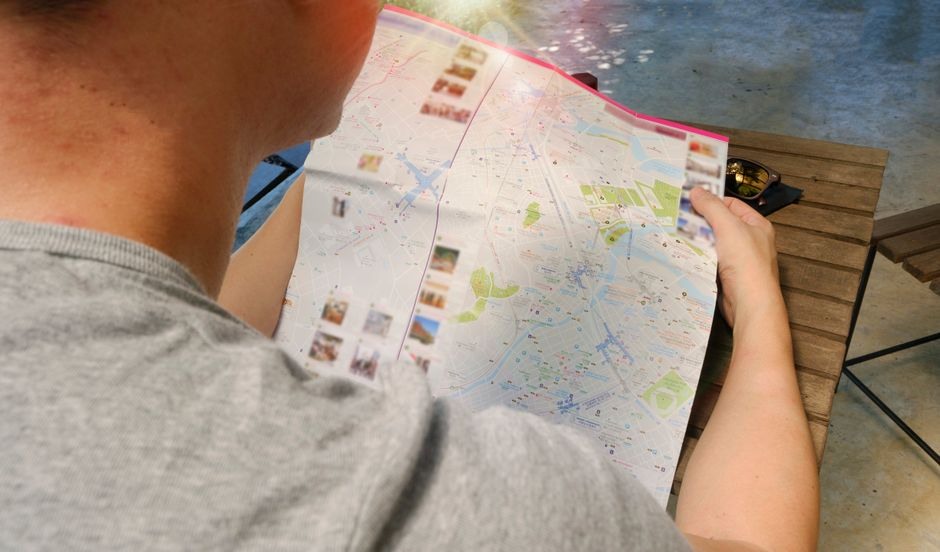
A paper map or a saved offline map is often enough. Mark a rough boundary rather than a precise line. Two or three adjoining streets can be more interesting than a rigid route if they contain courtyards, old shopfronts, small gardens, or changes in architecture that you would otherwise pass at speed.
Walk slowly enough to collect details
Look above ground-floor level. Balconies, rooflines, signs, brickwork, shutters, and old lettering often tell more about a street than its most obvious storefronts. Notice which buildings have been adapted over time and which still show their original use. On quieter blocks, listen for the shift from traffic to conversation, cutlery, birds, or the sound of a workshop behind an open door.
Photography can help, but it works best as a way of paying attention rather than documenting everything. Take a few pictures of details that would be hard to describe later: a hand-painted sign, an unusual doorway, the way late light falls across a façade. Leaving gaps in the record makes the walk feel lived rather than catalogued.
Give the route a natural pause
A short stop changes the pace. Sit somewhere with a view of ordinary movement rather than a famous panorama. A bench near a market, a café window, or steps beside a square lets the neighborhood come to you for a while. This is often when you notice the rhythms that disappear while walking: delivery bikes, school pickups, dogs waiting outside shops, regulars greeting one another.
Use the pause to decide whether to continue, loop back, or follow something unexpected. The best part of a compact walk is that changing direction costs very little.
End before the neighborhood feels exhausted
There is no prize for completing every street. Stop while you still have one or two places you would like to return to. A small unfinished edge gives the area continuity; it becomes somewhere you know a little, not somewhere you have consumed in a day.
Later, write down three things you remember without checking your photos. They might be a smell from a bakery, a color repeated on several doors, or the name of a street you liked. Those details are often what remain long after the bigger landmarks blur together.