A Calm Closet Reset for the Change of Season
The change of season is a practical moment to look at a wardrobe because the evidence is already in front of you. Some things have been worn constantly, others have stayed untouched, and a few pieces are waiting for a button, a wash, or a simple decision. The goal does not have to be a perfect minimalist closet. A useful reset simply makes the next few months easier.
Begin with the clothes that earned their place
Before removing anything, identify the pieces you reached for repeatedly. These are your reference points. They reveal the shapes, fabrics, colors, and levels of formality that actually suit your days. Put them back first, in the easiest part of the closet to reach.
This avoids a common mistake: organizing around an imagined lifestyle instead of the one you have. A wardrobe should make ordinary mornings simpler. The things that already do that deserve the best space.
Use three small piles instead of one giant purge
Work in short sections—one rail, one drawer, one shelf. Move doubtful items into three groups: needs care, wrong season, and undecided. The first pile gets a concrete next step such as mending, cleaning, or replacing a missing button. The second can be stored away if space is limited. The undecided pile is the only one that needs reflection.
For those uncertain pieces, ask whether the problem is fit, condition, comfort, or simply lack of opportunity. That question is more useful than asking whether an item sparks joy. A coat that is warm but uncomfortable at the shoulders has a clear problem; a shirt that is pleasant but never chosen may simply duplicate something you prefer.
Make storage visible enough to remember
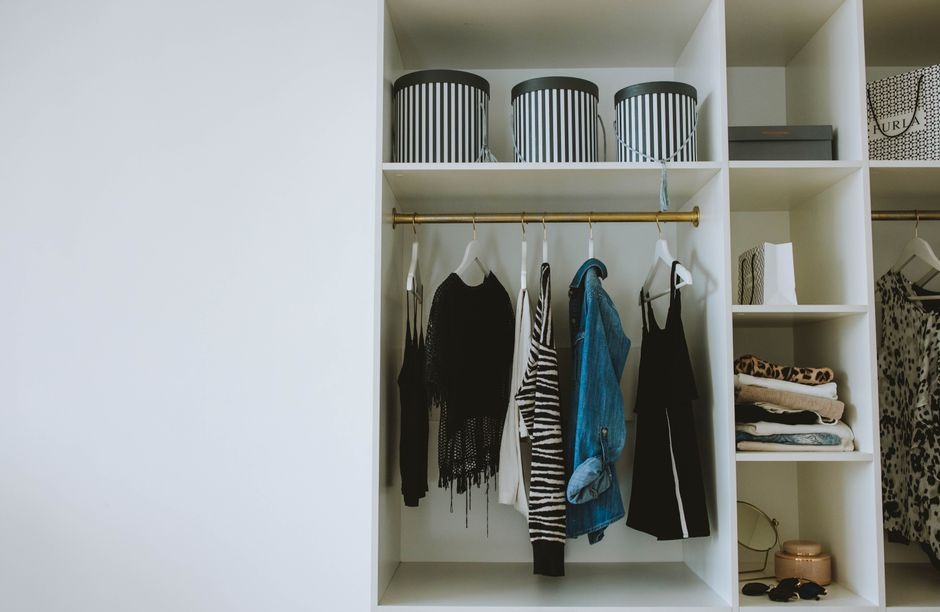
Closed boxes are useful for true off-season storage, but everyday items benefit from visibility. Fold knits so you can see each one, keep accessories together, and avoid stacking frequently worn clothes behind rarely used pieces. A small amount of empty space is functional: it makes it easier to put things away without rebuilding the whole shelf.
Create a repair window
Set aside one bag or basket for repairs and alterations, then give it a deadline. If a task is easy, do it within the week. If it needs professional help, schedule the visit rather than letting the item remain in limbo for another season. Clothing that is almost wearable can create more clutter than clothing you have clearly decided to keep or release.
At the end, take a quick photograph of the finished rail or shelves. Not for perfection, but as a reference. In a month or two, it will be obvious which zones stayed useful and which ones need a different arrangement. Good organization is rarely a one-time solution; it is a layout that becomes more accurate as you use it.